

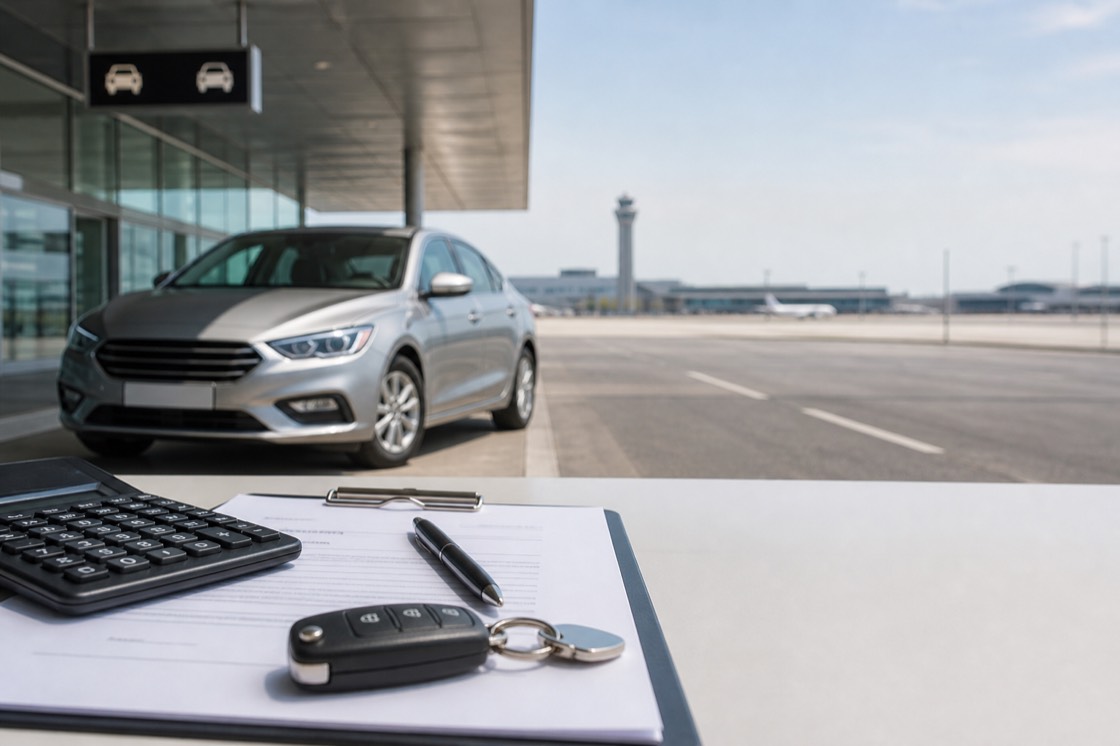
When you hire a car, several costs can apply beyond the base rental car charge. This guide lists the main ones: location fees, deposit, optional extras at the desk, fuel or charging, and charges linked to parking tickets or speed camera fines so you know what to check when you compare offers.
What costs can apply
A clear rental car comparison looks at more than the total booking price. The total often combines the rental rate, location-related fees, the payment hold at pickup, and any extras you choose, or decline, for protection, fuel and equipment.
- Base rental rate: The advertised price for the car category and dates.
- Mandatory location fees: Charges linked to airport or city pickup that may already be included or listed separately.
- Deposit / card hold: An amount blocked on the main driver's credit card at pickup. This hold is not the same as the excess.
- Optional extras: Insurance upgrades, GPS, child seats, additional drivers and similar add-ons.
- Usage costs: Fuel or charging, tolls, parking, traffic fines and any mileage beyond the included allowance.
Common fees and surcharges
Many fees appear in the rental conditions or offer details. The table below lists costs travellers often overlook when comparing only the base rental car charge.
| Cost | What it usually covers | What to check |
|---|---|---|
| Airport / location fee | Pickup at an airport or high-demand location | Whether it is already in the total price |
| Station tax | A location charge for pickup or return at a rail or city station desk | Whether station pickups add an extra levy |
| Harbour tax | A location charge for pickup or return at a port or ferry terminal | Whether harbour / port desks include this fee |
| Environmental fee | A charge related to local environmental or sustainability levies | Whether it is mandatory and already included |
| Cleaning fee | A charge if the car is returned excessively dirty (e.g. sand, mud or stains) | Return condition rules and when cleaning is charged |
| Young / Senior driver fee | Extra charge for drivers under or above a set age | Age limits and any daily surcharge |
| Additional driver | Permission for a second named driver | Per-day cost and document requirements |
| One-way fee | Different drop-off location from pickup | Whether cross-border or city-to-city fees apply |
| Out-of-hours fee | Collection or return outside desk hours | Opening times vs your flight schedule |
| Fuel / charging policy | How full the tank or battery should be on return | Full-to-full, prepaid fuel or charging rules |
| Deposit hold | Security for excess, fuel, tolls or fines | Amount, card type accepted and release timing |
| Excess / damage liability | Amount you may pay if the car is damaged | Included CDW level and optional upgrades |
| Traffic / parking fine + admin fee | The fine itself, plus a rental car company fee for handling the notice | Who pays, how you are notified, and any admin charge |
Excess and deposit are especially easy to confuse. For a clearer breakdown of CDW, excess and protection packages, see rental car insurance explained and zero excess car rental.
Extras often offered at the desk
Some costs appear only when you collect the car. Desk staff may offer useful add-ons, but they can also raise the total quickly if you accept them without checking what you already booked online.
- Insurance upgrades: Higher protection or excess reduction may be useful, but compare them with the cover already in your offer.
- Navigation and Wi-Fi: Convenient, yet often more expensive than using your phone offline maps.
- Child seats and boosters: Sometimes required by law; check price, fitting and whether bringing your own is allowed.
A good rule: pause before saying yes. Ask whether the extra is mandatory, already included, or optional and what it costs per day versus for the full rental.
Parking tickets and speed camera fines
If you get a parking ticket or are caught by a speed camera in a rental car, the notice is often sent to the rental company first because the vehicle is registered to them. You usually remain responsible for the fine, and many rental car company also charge an administration fee for passing on your details or processing the charge.
- Do not ignore the notice: Unpaid tickets can escalate with late fees, debt collection or problems on a future rental.
- Check who must pay: In most cases the renter pays the fine; the rental car company may either charge your card or give authorities your driver details.
- Expect an admin fee: Alongside the fine, rental car company often add a handling fee. Look for this in the rental conditions before you book.
- Keep your booking details: Save the rental agreement, pickup time and drivers named on the contract in case you need to confirm who was driving.
- Pay through the correct channel: Follow the instructions on the official notice or the rental car company's message. Avoid unofficial payment links.
- Dispute only with evidence: If you believe the ticket is wrong, gather photos, timestamps or route proof and contact the issuing authority or rental car company promptly.
The simplest way to avoid this cost is prevention: follow local speed limits, watch for bus lanes and restricted zones, and pay for parking through official apps or meters before you leave the car.
Step-by-Step: Spot fees before you book
Use this checklist to review possible charges between booking and pickup.
- Read the offer inclusions: Confirm what the total price covers: taxes, airport fees, mileage and basic protection.
- Check deposit and excess separately: Note the amount blocked on the main driver's credit card, and the excess you may still owe if damage occurs. These are two different figures.
- Review fuel or charging policy: Plan whether you will return the car full or need a prepaid option.
- At the desk, verify before accepting: Ask which charges are mandatory and decline extras that duplicate what you already booked.
- Know the fine process: Check how the rental car company handles parking tickets and speed camera notices, including any admin fee.